Monday, April 5, 2010

The Finish- My Reflection on Southern Identity


In my third blog post, I mentioned that southern identity is shrinking but will not be forgotten or gone in the future. I said this because I felt that media, entertainment, and food will always remind people about what it means to be southern even though the southern identity is being expressed less and less now. I based my opinions on my own experience. Since I grew up in the North, I did not really know much about the southern identity. Even when I finally moved to the South, I still did not have a clear notion of what it means to be southern. Thus, I felt that southern identity is shrinking. The majority of my knowledge of southern identity, however, actually came from common southern stereotypes.

For my fourth blog post, I introduced a topic about southern stereotypes. I wrote about common southern and northern stereotypes and asked my blog group if they thought there is still a difference between northerners and southerners now. I feel that when people describe the southern identity, they are describing an identity that contrasts with the rest of the regions of America, mainly the North. I believe that the southern identity still exists. If there is no longer a difference between northerners and southerners, then the stereotypes are no longer valid and the southern identity does not exist anymore. Stereotypes, although sometimes extremely exaggerated, do represent some truth. Southern stereotypes are more like exaggerated generalizations of the southern identity.

In conclusion, I would like to add to my third blog post. Southern identity will not be forgotten or disappear because of media, entertainment, and food-- more specifically-- the portrayal of southern stereotypes in media, entertainment, and food. Stereotypes may not completely represent southerners, but they provide a starting guide for people who do not know much about the South to learn more about the South. As long as the southern identity exists, southern stereotypes will always exist.

In this video below, a southerner, who has lived and traveled all over the south, talks about southern stereotypes. He goes in depth about politics, laws, sports, education, etc. He thinks that some of them are very true.



Sunday, April 4, 2010

People With a Large Effect


Since I have always loved music, I have to say that one of the most important Southern figures are Elvis Presley and Johnny Cash. Elvis is one of the most famous musicians of all time, and redefined music for all to come. His style of music was something new. People hadn't heard anything quite so loud, alive, and different, especially in such a common setting. Elvis became a household name, playing on radios all about the country, as well as live shows. He also had different phases of music, transitioning between blues, gospel, and rock and roll. The King brought new musical ideas to the minds of musicians everywhere.

Johnny Cash is another famous Southern musician. He is the most famous country musician, at least from my perspective. Although I don't know much about his music, I know that he himself had a very interesting life and musical career. He is about the only country musician that I feel everyone across America has ever heard of. I can think of many people who have become rather interested in country music directly as a result of enjoying Johnny Cash's music. Although not exactly a country fan, I can say that having heard a few songs here and there, I don't mind listening to his music. It comes off as being country, but also as having blues and rock and roll, mixed into one, as with Elvis.

The Finish


In order to fully conclude our blog I’d like to introduce an open ended topic. In retrospect to our almost completed blog, how do you feel about Southern Identity as an entity within itself? Do you think that it is the culmination of a mimicked past forever lost or is it but a dynamic regional identity constantly evolving and changing within itself. I know that we have spoke of food, people, cities, music, stereotypes, and literature all with respect to Southern Culture or different cultures with comparable/dissimilar traits. So for this topic, more clearly defined – I’d like to choose one thing that you have written about before and retrospectively analyze it from a Southerners perspective as clear and accurately as possible. Do not think of yourself as the analyzer but instead empathize and figure exactly why something it is the way it is. Merely follow up a topic that you thought wasn’t complete.

In my first blog posting I wrote about Southern Undergraduate Fraternities. I would like to further enlighten my audience on the specifics of what Southern Brotherhood means. Southern Identity is class. That is why the South possesses such a unique culture – having recently returned to my hometown I can more clearly see why Fraternities existed. They existed, in the past, to create ties between men in order to create a network in which will aide them in the future. In doing so, the class of families with which these individuals come from will remain or begin their climb to the top echelons of their communities. As I have aged, I have seen these lines of demarcation more clearly with every return home. Though more subtle than before, these class differences are as old as the South itself and I believe that this is why the South is such a different place from the rest of the United States and is why it is both celebrated and looked down upon.

Saturday, April 3, 2010

The United States versus The United States


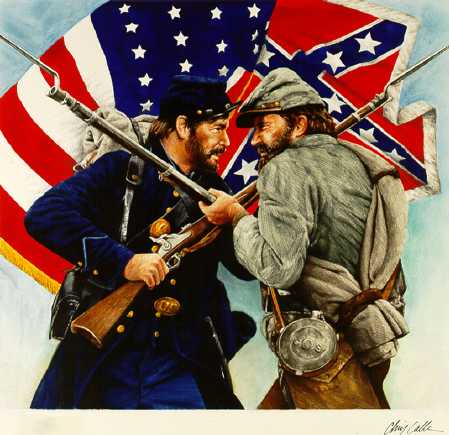
The Civil War had such a pivotal impact on The United States especially the South. Not only was the South’s culture integrated with slavery but their economy was almost entirely reliant on as means of agricultural production. With this said, the divide between the North and the South has been commonly misunderstood for ages. The Civil War was not a war between slavery versus non-slavery but a war of change, a change from state control and federal control. The emancipation proclamation was a ploy to keep European nations, whose economies heavily depended on the south’s textile production, from aiding the southern confederacy.

when Lincoln presented the Emancipation Proclamation many Union regiments refused to fight as the President had compromised their reason to fight. Lincoln, at the point of a gun in many cases, forced the soldiers back into the fray and the turmoil subsided rather quickly. By the way, the Emancipation Proclamation was merely a political move to keep European powers from joining the South in their struggle. England, for example, was in a deep economic depression because so much of their economy was based on the textile trade which was decimated when Lincoln’s blockade keep the world’s largest supplier of cotton from shipping. In addition, not a single slave was freed by the Proclamation. If one reads it closely, it frees only those slaves still in Southern-held territory – a sovereign nation where he had no authority. He couldn’t free the slaves in the North or Northern-held territory as he has no right as President to usurp existing laws.

Northern aggression also provoked Virginia, who initially did not want to leave the Union but instead negotiate, only to succeed after federal troops marched through their territory without the states approval. At this time, there was no constitutional rule which made this viable.


In the beginning, the term ‘The United States’ was plural but Lincoln’s vision was singular as it is today. The South was forever changed after this monumental movement in history but it also be forever influenced by the this past.

Quoted Article

People with a Large Effect on the South

I'm not quite 100% sure on when my blog topic date is, but I'm going to introduce a topic and feel free to follow it if you want to.

The person I choose who had a huge effect on the South is Abraham Lincoln. Born in Kentucky, he was considered Southern and grew up farming, hunting, fishing, and doing chores. He would be the United States 16th president and have a great impact on the South, and the world.

"It started in 1832 when he ran for a seat at the Illinois House of Representatives. Lincoln was later elected for that seat and started his plea to end slavery. He soon grew more popular and more began to hear his opinions."

With him being sworn in to presidency on March 4, 1861, a civil war would start against the South one month later. After the South was defeated and the Emancipation Proclamation was signed, slavery was abolished in the United States. This would change the South entirely, especially the ways its economy worked.

"Abraham Lincoln made an enormous, and important difference in the world, he abolished slavery. This was important because, if he would not have abolished slavery there is a chance slavery would still exist. That means no freedom and that’s what America is all about."

He not only created an identity for American as a free nation, but he changed an unlawful scheme which effected many people's lives greatly. He may have been hated by many, which would cause a premature death, but he made a difference in the South by abolishing slavery.

Monday, March 29, 2010

My Hometown, LaGrange

“The Greatest Little City”

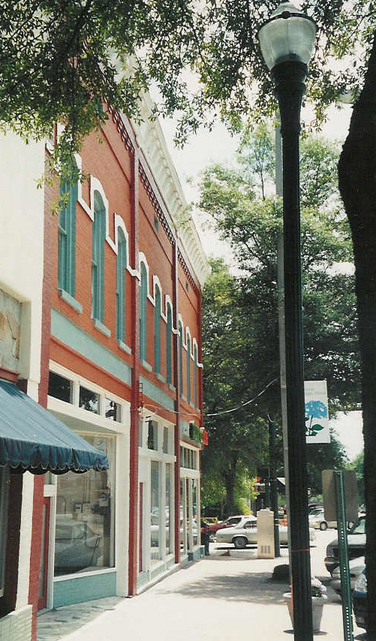
I have lived in LaGrange for the last 16 years of my life until coming to Georgia Tech. From obvious personal experience I believe LaGrange offers an exemplary example of the perfect southern town. Although referred to as, “The City of LaGrange” I believe that it is more town-like when compared to cities like Columbus and Newnan Georgia which I differentiate by a feeling of small town attitude and architecture (even if it is a little ‘Disneyland’ like). Southern culture there is epitomized by a practice good manners, more churches than all the other structures combined, pickup trucks with elaborate suspension kits and giant swamping tires (ironically no real swamps exist anywhere in the vicinity) and just some plain southern people.

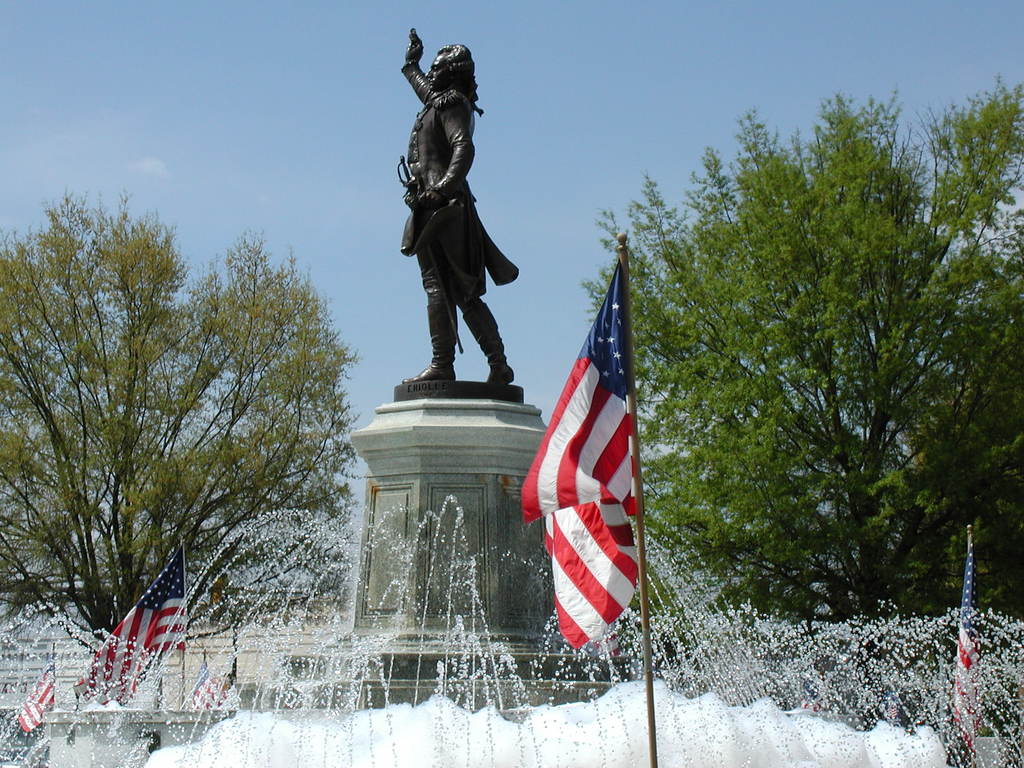
The layout of the city also lends well to ‘southerness’ it so accurately represents. The epicenter consists of a statue of LaFayette, the founder of the city, surrounded by small private businesses you’d find in most small towns. Down the road one would find a small Liberal Arts College, LaGrange College, and further past this you would enter the nice part of town where old plantation homes stand against a small road. After these homes one reaches the suburbs which are but small subdivisions scattered through vast tracts of country land. In between and past these you would find immense farms which stretch on till the next county.

Having lived in LaGrange for a large portion of my life allows me insight into what southern identity, to myself, is representative concerning cities/towns. Thus I believe that LaGrange is the epitome of a Mayberry-like southern town.

Sunday, March 28, 2010

Virginia Highlands


My family and I went to a seafood restaurant for lunch today in Virginia Highlands, and it had me thinking about how it fits with southern identity. Driving through the area, it has a distinct feel of being classy and old. Around this area however, are several homeless and poorer parts of Atlanta. This article is the "History of Virginia-Highland" describes the history of this area, and how it began as a farm after the War of 1812. It was greatly effected during the Civil War like much of Atlanta, and later rebuilt into the neighborhood with most construction of the houses occurring form 1910-1930.

From the article above,

"Today Virginia-Highland is one of Atlanta’s most desirable neighborhoods. The neighborhood’s historic structures, which include the Samuel M. Inman School, the 1904 Adair Mansion, Fire Station #19, as well as historic homes, give the community a distinct sense of place. Virginia-Highland’s rich urban fabric and

walkability create a pleasant environment that all can appreciate. "


This explains the old, yet pleasant environment that I felt when traveling through the area. However all of the success in the area still has it's downsides.


"Today the neighborhood is plagued by parking and traffic problems. Furthermore, the business composition of the neighborhood is greatly changing and becoming more tourist and less resident-oriented. Each weekend thousands of cars descend on the neighborhood streets and wreak havoc. Many area residents cannot leave their homes because of blocked driveways and many patrons cannot find parking. "


In conclusion, I think that the this area creates a sense of southern identity, with such a rich southern history now sitting in an urban area, it creates a sensational place. The housing is all 1900's southern, and with many cites to see such as Fire Station #19 which was built in 1924. With several people coming from other areas so visit Virginia Highlands, all of the people might not reflect the south, however the look of the area and the historic significance allow an accurate representation of the visual part of the South.